I think Ama's ideas on group vs individual is really interesting, especially the idea that groups could exist without individuals. However, I wondered if that idea of individual actually exists, if we are all made up of bits and pieces of things that we learn and take from other people (the group)? I think the answer to group or individual has to be both, because you can't really have one without the other. Individuals make up groups, but the groups help to make the individual.
Post at http://the-writing-junkie-school.blogspot.com/2013/05/question.html
Sunday, May 12, 2013

Optimisim/Pessimism
Thinking about human nature makes me realize alternately how silly and optimistic I am, but also how cynical I can get. I think that's true of a lot of the philosophers that we looked at. I think as a whole we want to see the good in things but sometimes get bogged down in the bad. I think we back ourselves into a lot of corners that we can't get out of, and then sometimes rely on faith and improvable ideas to help us get out of them. But I don't think that's bad. And I don't think we're bad. So, I guess, there's my optimism to end the semester.
Sunday, May 5, 2013
Response to "Excuses for God"
Although I don't necessarily agree with philosopher's excuses and uses for God, I can understand why they need to throw him in as a sort of loophole. I think with some theories they really do just back themselves into a wall that they can't get away from, and I think some lines of thought will really just make them crazy. In a way, some philosophers could need God more than the rest of us, just to keep them sane and give them a (not really truthful) sense of stability.
Original Post http://siearrasviewsnhn.blogspot.com/2013/04/excuses-for-god.html
Original Post http://siearrasviewsnhn.blogspot.com/2013/04/excuses-for-god.html
Conception
I thought the idea of creating the world was interesting, if problematic and slightly terrifying. The idea that a person, such as your mother, exists only when you conceive the idea of them was really interesting. However, I think you would have to make yourself crazy by thinking like that, so I can understand why philospohers would look for loopholes out of it.
Towards the beginning of the year, my friends and I had this really silly joke about how one by one we were going to turn twenty and just stop existing, but since I was the baby, I was going to be just sitting in the dorm for a month talking to my friends who weren't actually there and looking completely crazy. I guess it makes sense if you think about it in the way where people only exist when you think they exist, but I really don't see how that could be true.
Towards the beginning of the year, my friends and I had this really silly joke about how one by one we were going to turn twenty and just stop existing, but since I was the baby, I was going to be just sitting in the dorm for a month talking to my friends who weren't actually there and looking completely crazy. I guess it makes sense if you think about it in the way where people only exist when you think they exist, but I really don't see how that could be true.
Sunday, April 28, 2013
Response to "The Importance of Science"
I completely agree with Sierra that science needs to be considered when considering human nature. The topic has come up again and again with various aspects of human nature that we've looked at (Darwin, free will vs determinism, nature vs nurture, etc.). I think that religion can still play a part, and that people can- and should!- believe whatever they want, but I think it still has to be tempered by science and fact.
Post at: http://siearrasviewsnhn.blogspot.com/2013/04/the-importance-of-science.html?showComment=1367174355769#c9061295726226053460
Post at: http://siearrasviewsnhn.blogspot.com/2013/04/the-importance-of-science.html?showComment=1367174355769#c9061295726226053460
Darwin (And Science Tests)
Although most of Darwin's theories can and have been proven, he's still ended up as one of the most controversial theorists. (Though, to some extent, nearly everyone we've talked about has been controversial for some reason or another; I guess that's the price of knowledge?) I think that the proof part is actually the part that people have the most trouble with. Other philosophies can more easily be ignored, as it's just someone telling you that they disagree. Darwin can actually back up his claims and that's harder to ignore if his beliefs go against yours. I think that's why evolution is still considered a touchy subject in this day and age, not because there's proof for evolution but because there's proof against creationism.
My cousin actually posted something about this on FaceBook the other day. If the picture of the quiz isn't awesome enough, the quote from Bill Nye might be: "The Earth is not 6,000 or 10,000 years old. It's not. And if that conflicts with your beliefs, I strongly feel you should question your beliefs."
Response to "Are There Contemporary Existentialists?"
I thought Hailey's question and her findings were really interesting. I think this kind of goes back to what I said in my last post about it being hard to connect with the existential ideas because of our need to believe in something. I think that existentialism might have been so connected to it's historical context that, out of that context, it started to fail.
Hailey's Post: http://hailykellihernhn.blogspot.com/2013/04/are-there-contemporary-existentialists.html
Hailey's Post: http://hailykellihernhn.blogspot.com/2013/04/are-there-contemporary-existentialists.html
Something Versus Nothing
Although there are so many faults and holes in religion, and the existentialists are right in pointing them out, it seems to me that religion is still easier to swallow than existentialism. I think that we want something to believe in, with or without proof, and I think that that fact might be part of our human nature. The existentialists are still clinging to their beliefs; they cling to their belief in nothing. But something seems easier to believe in.
Monday, April 15, 2013
Response to "It's There But We Can't See It"
I'm not sure if it's true, but I've read that your brain doesn't make up faces so the people you see in a dream who aren't people you know in real life are still people you've still actually seen- random faces you've seen in a crowd, etc. I think there's so much that we can't know about how our brains function and that there's just as much that we can't know about the universe- especially if there's things that we can't see/process. I agree with Ama that there's always the possibility that there's more out there than we understand and that even though we can't say for certain that there is, we also shouldn't ignore the possibility that there could be.
Original post:
http://the-writing-junkie-school.blogspot.com/2013/04/its-there-but-we-cant-see-it-nohn.html
Original post:
http://the-writing-junkie-school.blogspot.com/2013/04/its-there-but-we-cant-see-it-nohn.html
Freud and Religion
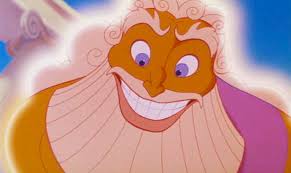
I think it would be interesting to see how Freud's views on religion would play out with a focus on a non-Christian religion. A lot of his argument focuses on God as a benevolent paternal father figure and the way that that's expressing the way that children revere their parents when their young. What about Old Testament portrayals of God, or in religions where there is no benevolent father figure? Or is there always a patriarch? After all, there's Zeus in the Greek pantheon, but (outside of Disney) I wouldn't necessarily refer to him as a benevolent father figure...
Sunday, April 14, 2013
Response to "Religion as a Hope Mechanism"
I think that Sierra, and Marx, and all the others who believe that religion is made up and that people created God and not the other way around have very good points. And, like Sierra, I don't see that as a bad thing. However, I don't think that that belief is any better to push than any religious beliefs are. I don't think we need to accept that religion is made up anymore than we need to accept a specific religion. As long as someone's religious beliefs aren't harming anyone, why should they be told that it's a lie? Even if it isn't true, it's true to them, and that might be more important.
Original post at:
http://siearrasviewsnhn.blogspot.com/2013/04/religion-as-hope-mechanism.html?m=1
Changes
I think it would be interesting to see how much of a change would have to occur in the political economy for it to affect other parts of human life. I feel like all these changes would have to happen really slowly and gradually to prevent a major backlash. If the political economy changed super quickly or all at once without warning, I don't know if it would change things like religion and family values, or at least not completely. With a sudden, intense change, i think people would be more likely to hold onto the beliefs they have for dear life.
Monday, April 1, 2013
Response to "Jump on the Bandwagon"
I agree with Sierra that if everyone is a free loader than there has to be some sort of scale of free loader-ness. I think to a small effect, it isn't necessarily a bad thing, or at least not a condemnable thing, and the term "free loader" seems to imply judgement. With the example she gives of being offered a favor and benefiting from someone else's work, I don't think that's really a bad thing- as long as the favor is returned, not necessarily to that person, but to someone. I think as long as you're "paying it forward" everything will probably be okay.
Original post at http://siearrasviewsnhn.blogspot.com/2013/03/jump-on-bandwagon.html
Original post at http://siearrasviewsnhn.blogspot.com/2013/03/jump-on-bandwagon.html
Rousseau and Care Bears
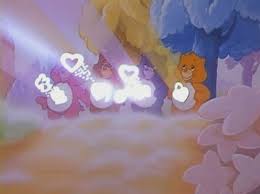
I definitely agreed with Rousseau over Hobbes, finding his optimism a lot more appealing. The one thing that doesn't fully make sense to me of his theories though is his idea of "forcing people to be free." The analogy we were given in high school for this was actually Care Bears. The Care Bears have this magical Care Bear Stare that they can use to get things done. In one movie, Care-a-Lot (their home) is about to be destroyed and all the Care Bears need to help for the better of the group. However, Grumpy Bear is grumpy and doesn't want to, so they Care Bear Stare him, essentially making him agree and help them, and thus forcing him to be free.
Tuesday, March 26, 2013
Response to "What Can Change the Culture?"
I agree with Sierra that the main focus of changing culture, in regards to meat eating or anything else, has to be education. I think that it should be more outwardly broadcasted what sorts of cruelty animals face when being slaughtered or raised to slaughter, but not in such a way that meat eaters are antagonized beyond the point of being reasonable. Education needs to come from sources other than PETA and in more effective ways. However, I think there are other ways that could help promote vegetarianism as well, such as presenting it in a way that doesn't seem so radical or inclusive, and also by creating more publicly available vegetarian options and better tasting meat substitutes.
Original Post: http://siearrasviewsnhn.blogspot.com/2013/03/what-can-change-culture.html
Original Post: http://siearrasviewsnhn.blogspot.com/2013/03/what-can-change-culture.html
Vegetarianism
I'm a vegetarian. I have been for four years, and have wanted to be for longer. Freshman year of high school, we moved out to farmlands, and I couldn't eat a hamburger with cows mooing in my back yard. So I'm a vegetarian. My boyfriend is not.
It's never been a problem for us though. He doesn't force his beliefs (or bacon) down my throat and I don't force mine (or tofu) down his. At first he didn't even believe I was a vegetarian, because I don't criticize him/anyone else for eating meat. Sure, I'll ask what kind of "dead animal" something is, rather than what kind of meat, but that's mostly just how I talk and not actually a great moral judgement on his nutritional choices. I do personally think that killing animals, even for food, is wrong but I also understand that not everyone feels that way and that for a lot of people eating vegetarian (especially healthily) isn't an option. I think it's one of the battles we have to fight through education, while still kind of giving people leeway to do their own things. I don't think it's something that can be resolved through criticizing either side, which I think is what happens a lot when something like this comes into discussion. We have to learn to talk morals without pulling the morally superior card or nothing will get accomplished.
It's never been a problem for us though. He doesn't force his beliefs (or bacon) down my throat and I don't force mine (or tofu) down his. At first he didn't even believe I was a vegetarian, because I don't criticize him/anyone else for eating meat. Sure, I'll ask what kind of "dead animal" something is, rather than what kind of meat, but that's mostly just how I talk and not actually a great moral judgement on his nutritional choices. I do personally think that killing animals, even for food, is wrong but I also understand that not everyone feels that way and that for a lot of people eating vegetarian (especially healthily) isn't an option. I think it's one of the battles we have to fight through education, while still kind of giving people leeway to do their own things. I don't think it's something that can be resolved through criticizing either side, which I think is what happens a lot when something like this comes into discussion. We have to learn to talk morals without pulling the morally superior card or nothing will get accomplished.
Sunday, March 3, 2013
Response to Nature vs. Nurture.
I agree that nature probably has a greater effect than nurture just because there are so many traits that you can't cause by nurture. But I still find the studies that suggest nurture has to effect surprising. Can something so complex be influenced by one or the other?
Response to post at http://jennaoconnorr.blogspot.com/2013/03/nature-vs-nurture.html
Response to post at http://jennaoconnorr.blogspot.com/2013/03/nature-vs-nurture.html
Nature versus Nurture
I think nature versus nurture is so controversial because, as humans, we really don't like to be told what to do. We don't like to think that we're helpless, that every thing we do is controlled by some unchangeable force, that who we are has already been decided and we don't have a choice in the matter. That's why 'both' is sometimes the most easily accepted answer. We don't want to think that who we are is decided by how our parents treat/raise us- we want to be able to be different from that, change from that- but we don't want to think that these little things we're made up with but can't see have the end all be all decision on who we are either.

Sunday, February 24, 2013
Response to That School Blog
I thought the questions posed of whether the beliefs/views of either side were first logical, and then justifiable, were really valid questions that everyone should be asking. If we could just understand that people have different beliefs and that we aren't harmed by that fact, we would get along so much better. I also really appreciated the quote from the doctrine of the flying spaghetti monster. The question posed at the start made it seem very Christian-centered, which is where I found faults in Clark's argument in the essay, but using both and leaving the focus of the post to faith in general was really great.
***Response to http://the-writing-junkie-school.blogspot.com/2013/02/question-nohn_24.html
***Response to http://the-writing-junkie-school.blogspot.com/2013/02/question-nohn_24.html
Choking on Beliefs
An issue that came up in my head while doing the reading this week was the hypocrisy of, well, almost everyone. Not necessarily every individual (though, there are very few people who are never hypocritical, myself included), but certainly members of every group or every side of every argument or conflict. Whatever it is you believe, you want others to believe it too. On a very basic level, there isn't much wrong with that. You think that you're right, and you want other people to be right, too. But there is a very, very thin line between sharing your beliefs and shoving them down someone else's throat. Sharing is fine. Sharing is great. We're taught that the moment we're capable of being taught anything. But trying to force someone to believe what you believe isn't. What's worse, is that you can try to make someone else believe what you believe, but then get angry when they try to make you believe what they believe. That's another thing we're taught early on, the golden rule- treat others how you want to be treated. If you don't want someone to tell you what to believe, then you can't tell them what to believe. If people could, with in reason, believe what they wanted without forcing their beliefs onto others, the naturalism vs supernaturalism 'culture war' wouldn't be as much of an issue.
Monday, February 18, 2013
Response to A Possible Compatibilist Argument
I think that there can be free will and determinism and that the two can coexist. I think it just works in a way that determinism works on a larger scale. For example, Point A is a fixed point that is determined. You will get to Point A. However, the way that you get to Point A depends on you and the choices that you make. I don't think that means that free will isn't really real or just an illusion. Or, if it is an illusion, I don't think that it really matters. Whether free will and determinism are compatible or only one or the other is the Truth, I think as humans we're still going to do what we're going to do. We're kind of stubborn that way.
Original Post
http://hailykellihernhn.blogspot.com/2013/02/a-possible-compatibilist-argument.html
Original Post
http://hailykellihernhn.blogspot.com/2013/02/a-possible-compatibilist-argument.html
Determined or Destined?
It seemed surprising to find that scientists lean towards determination over free will because determination sounds an awful lot like destiny. Scientists and destiny seem more incompatible than determination and free will. But as I was thinking about it, I guess that the only real difference is a pretty big difference. Determination falls in line with the laws of the universe. Although scientists don't have any more control over the universe than they would an all powerful (or even semi powerful) deity, the universe is something they can 'prove' to exist. And, potentially, the universe would have to follow its own laws.

Sunday, February 3, 2013
Response to "Class Discussion Friday"
I agree with Jenna's views on the conversations we had in class last week. I really don't understand how such a vast difference between the rich and poor could be fair. Besides money/power, there isn't some great difference that suggests that the rich are better or deserve better. Often it is the poor who work harder but since I understand that that's just as much of a generalization as saying that the the rich deserve it, what you earn should depend on merit. However there needs to be a base level where everyone has basic necessities based on the merit of being human.
(...says the young, idealistic college student...)
Original post at:
http://jennaoconnorr.blogspot.com/2013/02/class-discussion-friday-what-is-platos.html?showComment=1359926811023&m=1#c6417222508472744540
Soulmates
“According to Greek mythology, humans were originally created with 4 arms, 4 legs and a head with 2 faces. Fearing their power, Zeus split them into two separate parts, condemning them to spend their lives in search for other halves.” –Plato’s The Symposium
I first heard this story as a child, watching "Xena: Warrior Princess" with my father. I've loved this explanation of soul mates ever since. So I was a bit confused when the textbook said that Plato was an advocate against marriage because it left too much to emotion and chance. If Plato believed that the soul was essentially the immortal essence of a person and that the soul had so much power/affect on your disposition, habits, and intellect- intellect linking to where you belonged socially in life- then how come he thought marriage was detrimental to society? Or, how could it be, if the couple was connected in such a way?
However, when I went to actually look at the text, there is a lot more to it than just a cute little story that can slide into popular culture. It has a darker, almost anti-love and kind of homophobic twist, basically used to explain homosexuality.
Sunday, January 27, 2013
Involuntary Evil
A Response to"Is Socrates' Idea that Every Evil Act is Involuntary True?"
Post at: http://wehavealwaysthoughso.blogspot.com/2013/01/is-socrates-idea-that-every-evil-act-is.html
Knowledge
One of Socrates' main theses was that virtue is knowledge. Knowledge, specifically self-knowledge, is how a person goes about living a good life. Being knowledgeable, a person would always choose good, as ignorance is the only evil. But how do you learn to be knowledgeable? How is that taught?
The two main ways of learning are probably school and just life itself. However, during that time the Sophists had sort of corrupted education, twisting it into a profession where they instilled virtue while holding that virtue was relative and teaching how to win at arguments (or 'win' at life) through tricky, circular logic. Socrates, though, stayed a good teacher, keeping and sharing his beliefs all the way up to his execution. So in the right way, maybe you can be taught to be knowledgeable (and by extension, good). However, Socrates is famous for his 'Socratic Method' where conclusions are drawn from being asked question after question, which is, essentially learning the answer from within yourself and your own life experiences.
The two main ways of learning are probably school and just life itself. However, during that time the Sophists had sort of corrupted education, twisting it into a profession where they instilled virtue while holding that virtue was relative and teaching how to win at arguments (or 'win' at life) through tricky, circular logic. Socrates, though, stayed a good teacher, keeping and sharing his beliefs all the way up to his execution. So in the right way, maybe you can be taught to be knowledgeable (and by extension, good). However, Socrates is famous for his 'Socratic Method' where conclusions are drawn from being asked question after question, which is, essentially learning the answer from within yourself and your own life experiences.
Subscribe to:
Comments (Atom)