I completely agree with Sierra that science needs to be considered when considering human nature. The topic has come up again and again with various aspects of human nature that we've looked at (Darwin, free will vs determinism, nature vs nurture, etc.). I think that religion can still play a part, and that people can- and should!- believe whatever they want, but I think it still has to be tempered by science and fact.
Post at: http://siearrasviewsnhn.blogspot.com/2013/04/the-importance-of-science.html?showComment=1367174355769#c9061295726226053460
Sunday, April 28, 2013

Darwin (And Science Tests)
Although most of Darwin's theories can and have been proven, he's still ended up as one of the most controversial theorists. (Though, to some extent, nearly everyone we've talked about has been controversial for some reason or another; I guess that's the price of knowledge?) I think that the proof part is actually the part that people have the most trouble with. Other philosophies can more easily be ignored, as it's just someone telling you that they disagree. Darwin can actually back up his claims and that's harder to ignore if his beliefs go against yours. I think that's why evolution is still considered a touchy subject in this day and age, not because there's proof for evolution but because there's proof against creationism.
My cousin actually posted something about this on FaceBook the other day. If the picture of the quiz isn't awesome enough, the quote from Bill Nye might be: "The Earth is not 6,000 or 10,000 years old. It's not. And if that conflicts with your beliefs, I strongly feel you should question your beliefs."
Response to "Are There Contemporary Existentialists?"
I thought Hailey's question and her findings were really interesting. I think this kind of goes back to what I said in my last post about it being hard to connect with the existential ideas because of our need to believe in something. I think that existentialism might have been so connected to it's historical context that, out of that context, it started to fail.
Hailey's Post: http://hailykellihernhn.blogspot.com/2013/04/are-there-contemporary-existentialists.html
Hailey's Post: http://hailykellihernhn.blogspot.com/2013/04/are-there-contemporary-existentialists.html
Something Versus Nothing
Although there are so many faults and holes in religion, and the existentialists are right in pointing them out, it seems to me that religion is still easier to swallow than existentialism. I think that we want something to believe in, with or without proof, and I think that that fact might be part of our human nature. The existentialists are still clinging to their beliefs; they cling to their belief in nothing. But something seems easier to believe in.
Monday, April 15, 2013
Response to "It's There But We Can't See It"
I'm not sure if it's true, but I've read that your brain doesn't make up faces so the people you see in a dream who aren't people you know in real life are still people you've still actually seen- random faces you've seen in a crowd, etc. I think there's so much that we can't know about how our brains function and that there's just as much that we can't know about the universe- especially if there's things that we can't see/process. I agree with Ama that there's always the possibility that there's more out there than we understand and that even though we can't say for certain that there is, we also shouldn't ignore the possibility that there could be.
Original post:
http://the-writing-junkie-school.blogspot.com/2013/04/its-there-but-we-cant-see-it-nohn.html
Original post:
http://the-writing-junkie-school.blogspot.com/2013/04/its-there-but-we-cant-see-it-nohn.html
Freud and Religion
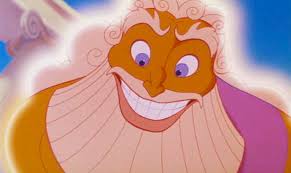
I think it would be interesting to see how Freud's views on religion would play out with a focus on a non-Christian religion. A lot of his argument focuses on God as a benevolent paternal father figure and the way that that's expressing the way that children revere their parents when their young. What about Old Testament portrayals of God, or in religions where there is no benevolent father figure? Or is there always a patriarch? After all, there's Zeus in the Greek pantheon, but (outside of Disney) I wouldn't necessarily refer to him as a benevolent father figure...
Sunday, April 14, 2013
Response to "Religion as a Hope Mechanism"
I think that Sierra, and Marx, and all the others who believe that religion is made up and that people created God and not the other way around have very good points. And, like Sierra, I don't see that as a bad thing. However, I don't think that that belief is any better to push than any religious beliefs are. I don't think we need to accept that religion is made up anymore than we need to accept a specific religion. As long as someone's religious beliefs aren't harming anyone, why should they be told that it's a lie? Even if it isn't true, it's true to them, and that might be more important.
Original post at:
http://siearrasviewsnhn.blogspot.com/2013/04/religion-as-hope-mechanism.html?m=1
Changes
I think it would be interesting to see how much of a change would have to occur in the political economy for it to affect other parts of human life. I feel like all these changes would have to happen really slowly and gradually to prevent a major backlash. If the political economy changed super quickly or all at once without warning, I don't know if it would change things like religion and family values, or at least not completely. With a sudden, intense change, i think people would be more likely to hold onto the beliefs they have for dear life.
Monday, April 1, 2013
Response to "Jump on the Bandwagon"
I agree with Sierra that if everyone is a free loader than there has to be some sort of scale of free loader-ness. I think to a small effect, it isn't necessarily a bad thing, or at least not a condemnable thing, and the term "free loader" seems to imply judgement. With the example she gives of being offered a favor and benefiting from someone else's work, I don't think that's really a bad thing- as long as the favor is returned, not necessarily to that person, but to someone. I think as long as you're "paying it forward" everything will probably be okay.
Original post at http://siearrasviewsnhn.blogspot.com/2013/03/jump-on-bandwagon.html
Original post at http://siearrasviewsnhn.blogspot.com/2013/03/jump-on-bandwagon.html
Rousseau and Care Bears
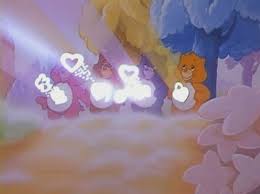
I definitely agreed with Rousseau over Hobbes, finding his optimism a lot more appealing. The one thing that doesn't fully make sense to me of his theories though is his idea of "forcing people to be free." The analogy we were given in high school for this was actually Care Bears. The Care Bears have this magical Care Bear Stare that they can use to get things done. In one movie, Care-a-Lot (their home) is about to be destroyed and all the Care Bears need to help for the better of the group. However, Grumpy Bear is grumpy and doesn't want to, so they Care Bear Stare him, essentially making him agree and help them, and thus forcing him to be free.
Subscribe to:
Comments (Atom)